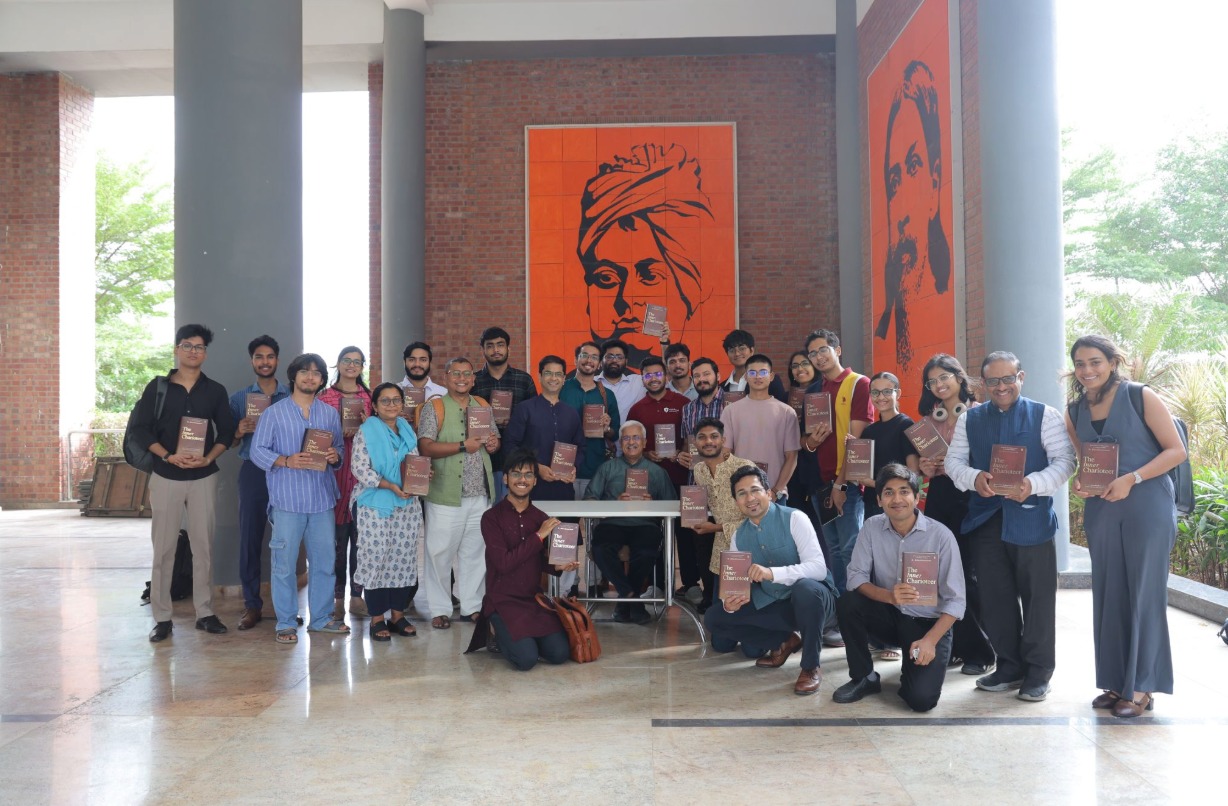
Dr. R. Balasubramaniam is a former Frank H. T. Rhodes Professor at Cornell University, development practitioner, leadership educator, author, and public policy expert. He also serves as a full-time member of NITI Ayog.
- Lesson 1: Self-mastery is the foundation of leadership
- Lesson 2: Leadership is about responsibility, not recognition
- Lesson 3: Self-reflection is a practice, not a one-time exercise
- Lesson 4: Timeless wisdom can speak to a new generation
- Lesson 5: Education must develop people, not just professionals
At the launch of his book, The Inner Charioteer, at Rishihood University, our learners, Ritesh and Tripti, sat down with Dr. Balu to explore leadership, self-mastery, and the wisdom of the Bhagavad Gita. The conversation offered valuable lessons on making better decisions, understanding oneself, and leading with purpose.
Here are five key takeaways from the conversation:
Lesson 1: Self-mastery is the foundation of leadership
Drawing on the Bhagavad Gita, Dr. Balu spoke about Indriya Vijaya, or mastery over the senses. It shows up in how we listen to others, respond to criticism, manage our emotions, and make decisions under pressure.
A leader who cannot guide their own thoughts and actions will struggle to guide others. Before asking whether a decision is popular or profitable, leaders must learn to ask whether it is right.
For anyone aspiring to lead teams, institutions, or communities, the starting point is the same: understand yourself before attempting to influence others.
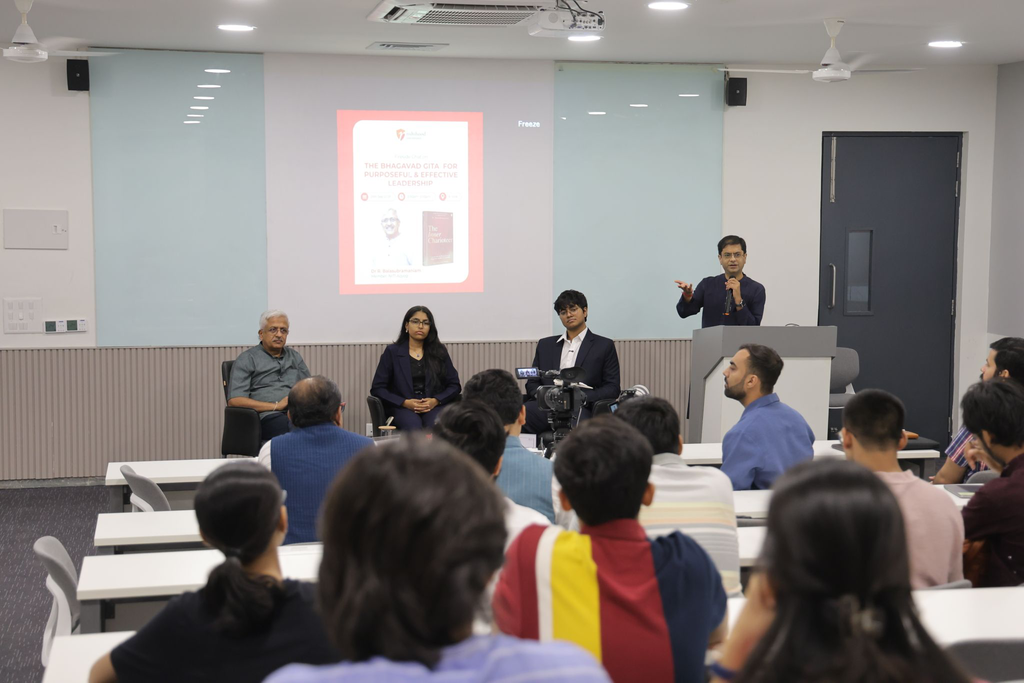
Lesson 2: Leadership is about responsibility, not recognition
Dr. Balasubramanium also highlighted the concepts of Tyaga and Seva. People often see renunciation and service as ideas that are hard to fit into the pressures of modern life.
The way he sees them, they are quite practical. They ask people to take full responsibility for their work without letting ego, ambition or the need for a particular result drive them.
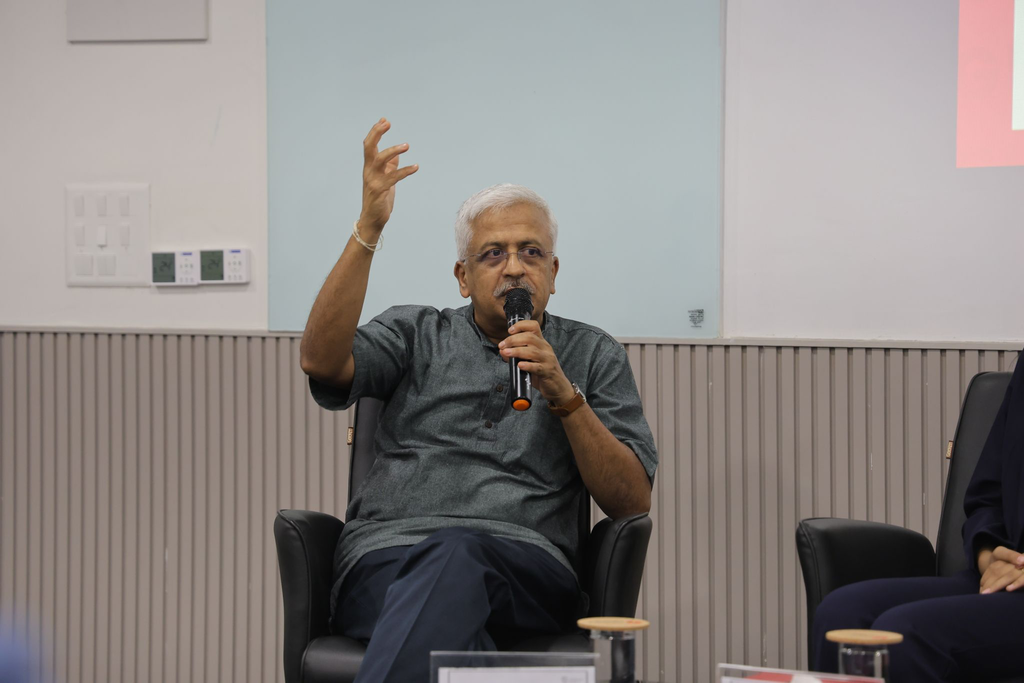
Lesson 3: Self-reflection is a practice, not a one-time exercise
One particularly important idea he shared with the learners was Sadhana i.e. The constant practice of self-reflection. Understanding oneself is not a one-time revelation but an ongoing process that requires patience and sustained practice.
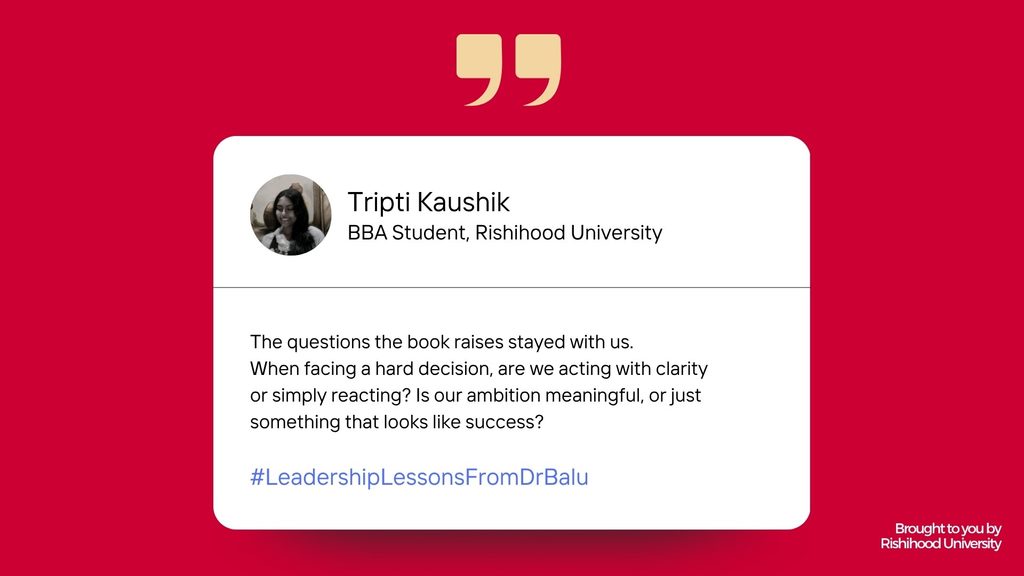
The questions the book raises stayed with the learners.
When facing a hard decision, are they acting with clarity or simply reacting?
Is their ambition meaningful, or just something that looks like success?
The Bhagavad Gita may be centuries old, but the tension between what we ought to do and what we feel like doing remains deeply relevant. Self-reflection helps us recognise that tension and respond with greater clarity.
Lesson 4: Timeless wisdom can speak to a new generation
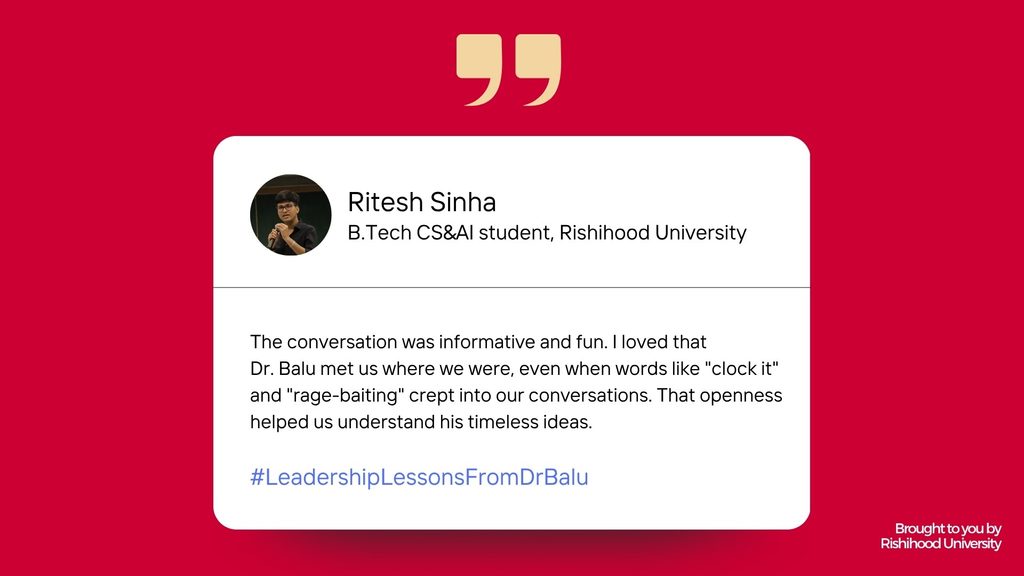
Dr. Balu connected with learners on their own terms, even as contemporary expressions such as “clock it” and “rage-baiting” found their way into the discussion. That openness proved that timeless ideas do not have to feel distant or inaccessible to younger generations.
The real question is not simply what the Bhagavad Gita teaches, but how its ideas can shape the way we live, work, make decisions, and lead.
By bringing ancient wisdom into conversation with contemporary experiences, Dr. Balu showed how philosophical ideas can become practical tools for navigating modern life.
Lesson 5: Education must develop people, not just professionals
The National Education Policy (NEP) 2020 emphasises holistic development, critical thinking, ethical reasoning, and the integration of Indian knowledge systems into education. It encourages institutions to look beyond academic qualifications and consider the individuals they are helping shape.
This is particularly relevant for learners preparing to take on responsibilities in business, technology, public policy, and society. Technical knowledge and professional skills matter. But so do judgement, self-awareness, empathy, and a sense of responsibility.
At Rishihood University, conversations like these create opportunities for learners to engage with ideas beyond the classroom and reflect on the kind of professionals and leaders they aspire to become.
The distinction between philosophical wisdom and everyday leadership becomes smaller when learners are encouraged to ask not just what they know, but how they will use that knowledge.
Leave a Reply